 Weather
 Locations
 Careers
 Login
Login


Lemon and orange updates
Market and crop conditions are mixed for lemons and oranges.
California's Valencia harvest was approximately 60% complete by early September, with large fruit sizing and quality issues continuing to weigh on prices. Domestic demand improved with back-to-school purchasing, particularly for smaller sizes, and some industry participants expect pricing to strengthen as supplies tighten later in the season. Weak orange juice prices and soft global demand remained headwinds, reflected in significantly lower Brazilian orange juice export revenues and prices compared to a year ago. USDA announced plans to purchase $57.5 million in fresh citrus, including $20 million in oranges and $25 million in mandarins, which should provide additional support to producers.
Lemon harvest in the desert region is picking up. While fruit quality is reportedly good, excessive heat during bloom may result in lower yields. Larger-than-expected imports from Argentina and Chile have increased available supply, resulting in rising inventories and softer market conditions. California Citrus Mutual is advocating for a tariff-rate quota on imports from Argentina to help address competitive pressures on domestic producers. Argentinian imports typically overlap with harvest in Ventura County.
Profitability
September 16, 2026Lemons: Breakeven profitability - Neutral 12-month outlook
Oranges: Slightly profitable - Neutral 12-month outlook
Relatively weak markets along with a surge in South American imports are pressuring lemon prices.
Orange prices have been impacted by large fruit sizing, quality issues and lower juice prices. Despite these challenges, most producers remain slightly profitable.
Domestic markets make up the vast majority of lemon and orange demand, with exports only accounting for about 11% of total production. The largest foreign markets include Canada, South Korea, Mexico, Japan, and to a much lesser extent, Hong Kong. Lemon and orange imports have increased significantly over the last decade and make up 17% of total domestic supply, a relatively high amount compared to other specialty crops. Increased plantings coupled with low labor costs and minimal trade barriers have enabled citrus growers in Central and South America to compete in U.S. markets.
Lemon production, exports and imports
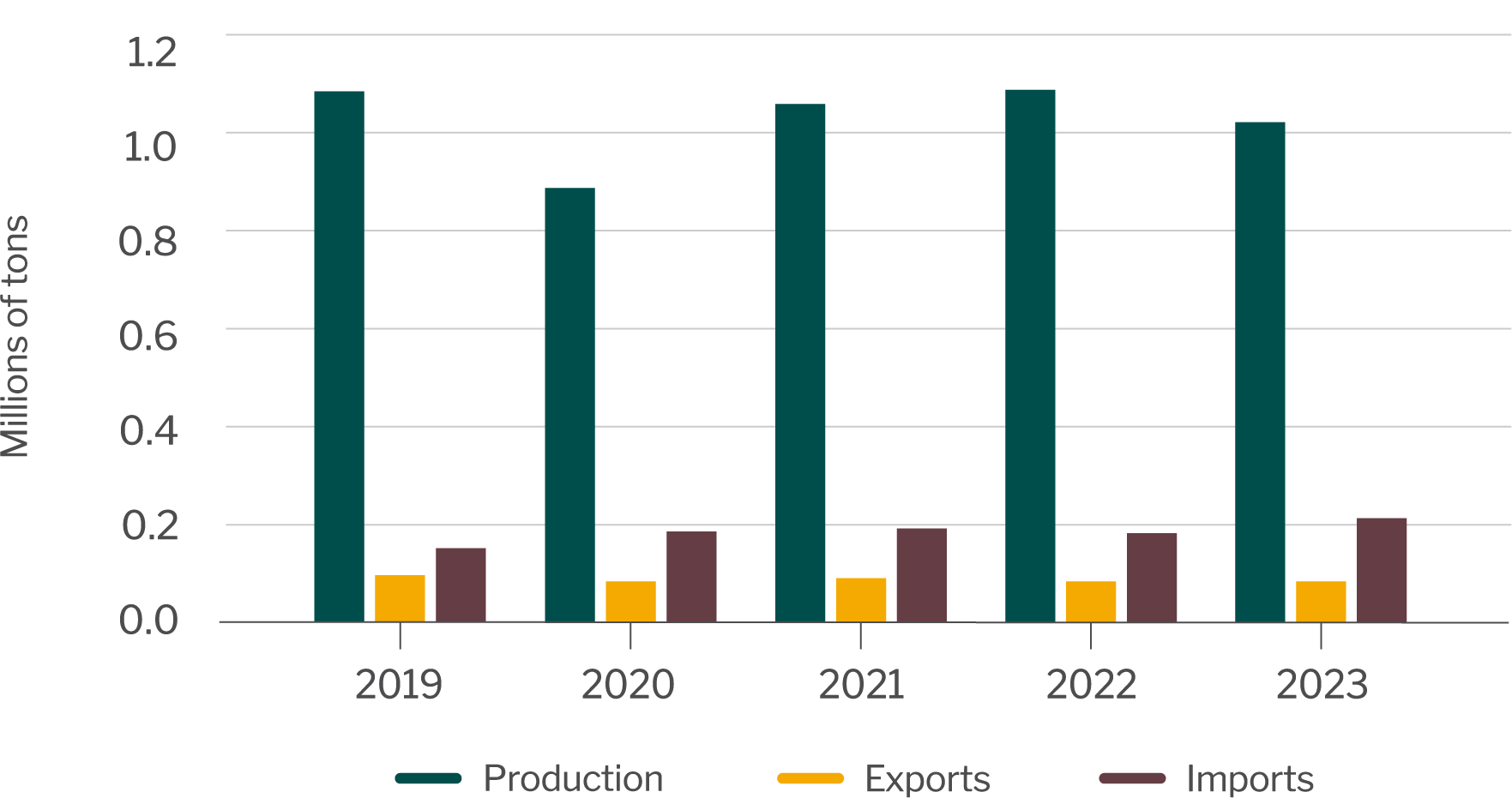
USDA Citrus Fruits Summary. U.S. Census Bureau. Crop year is from August to July.
Orange production, exports and imports
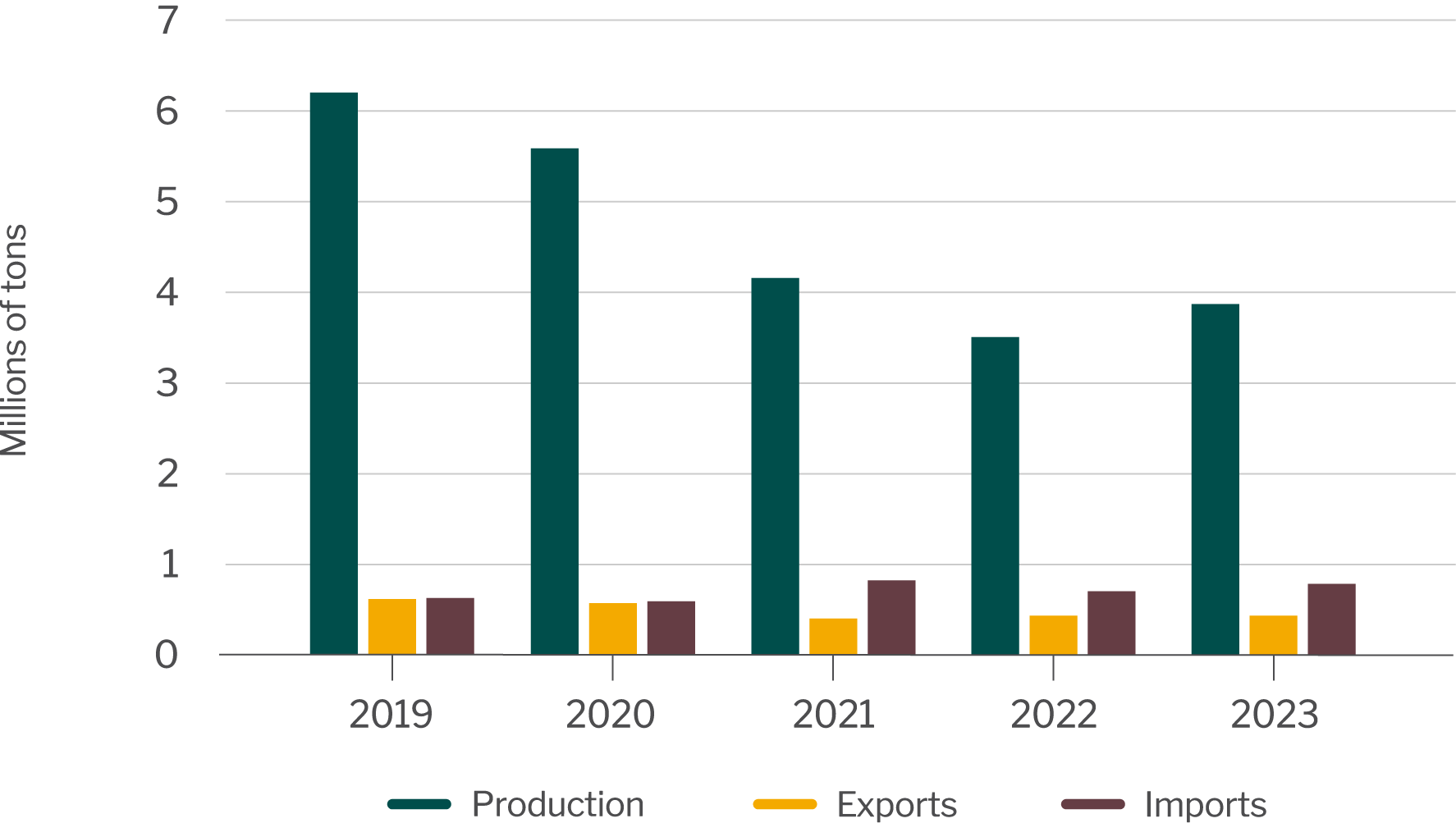
USDA Citrus Fruits Summary. U.S. Census Bureau. Crop year is from October to September.
Tariff tracker - Tariff rates applied to U.S. trade partners are consistenly updated to reflect policy changes. The World Trade Organization (WTO) tracks duties and tariffs on lemons and oranges. For your convenience, the following links will take you to tariff data for South Korea (fresh oranges and mandarins/tangerines/satsumas) and Japan (fresh oranges and mandarins/tangerines/satsumas). Citrus fruits are currently exempt from tariffs with Canada under the United States-Mexico-Canada Agreement (USMCA), but please refer to the U.S. Trade Representative website for up-to-date information. WTO also tracks rates for lemon imports and orange imports to the U.S. Please consult with a trade lawyer or professional for detailed and up-to-date insights on tariff rates and their application to lemons and oranges.
For guidance on interpreting duty and tariff rates, please refer to our Tariff Guide.
Lemon and orange updates
Market and crop conditions are mixed for lemons and oranges.
California's Valencia harvest was approximately 60% complete by early September, with large fruit sizing and quality issues continuing to weigh on prices. Domestic demand improved with back-to-school purchasing, particularly for smaller sizes, and some industry participants expect pricing to strengthen as supplies tighten later in the season. Weak orange juice prices and soft global demand remained headwinds, reflected in significantly lower Brazilian orange juice export revenues and prices compared to a year ago. USDA announced plans to purchase $57.5 million in fresh citrus, including $20 million in oranges and $25 million in mandarins, which should provide additional support to producers.
Lemon harvest in the desert region is picking up. While fruit quality is reportedly good, excessive heat during bloom may result in lower yields. Larger-than-expected imports from Argentina and Chile have increased available supply, resulting in rising inventories and softer market conditions. California Citrus Mutual is advocating for a tariff-rate quota on imports from Argentina to help address competitive pressures on domestic producers. Argentinian imports typically overlap with harvest in Ventura County.

Profitability
September 16, 2026Lemons: Breakeven profitability - Neutral 12-month outlook
Oranges: Slightly profitable - Neutral 12-month outlook
Relatively weak markets along with a surge in South American imports are pressuring lemon prices.
Orange prices have been impacted by large fruit sizing, quality issues and lower juice prices. Despite these challenges, most producers remain slightly profitable.
Domestic markets make up the vast majority of lemon and orange demand, with exports only accounting for about 11% of total production. The largest foreign markets include Canada, South Korea, Mexico, Japan, and to a much lesser extent, Hong Kong. Lemon and orange imports have increased significantly over the last decade and make up 17% of total domestic supply, a relatively high amount compared to other specialty crops. Increased plantings coupled with low labor costs and minimal trade barriers have enabled citrus growers in Central and South America to compete in U.S. markets.
Lemon production, exports and imports
USDA Citrus Fruits Summary. U.S. Census Bureau. Crop year is from August to July.
Orange production, exports and imports
USDA Citrus Fruits Summary. U.S. Census Bureau. Crop year is from October to September.
Tariff tracker - Tariff rates applied to U.S. trade partners are consistenly updated to reflect policy changes. The World Trade Organization (WTO) tracks duties and tariffs on lemons and oranges. For your convenience, the following links will take you to tariff data for South Korea (fresh oranges and mandarins/tangerines/satsumas) and Japan (fresh oranges and mandarins/tangerines/satsumas). Citrus fruits are currently exempt from tariffs with Canada under the United States-Mexico-Canada Agreement (USMCA), but please refer to the U.S. Trade Representative website for up-to-date information. WTO also tracks rates for lemon imports and orange imports to the U.S. Please consult with a trade lawyer or professional for detailed and up-to-date insights on tariff rates and their application to lemons and oranges.
For guidance on interpreting duty and tariff rates, please refer to our Tariff Guide.
IN THIS SECTION

Lemon and Orange Industry Perspective
View the latest AgWest Lemon and Orange Industry Perspective.
Learn more